
Issue 7
July 2026
The Moon Toy
by Swetha Amit
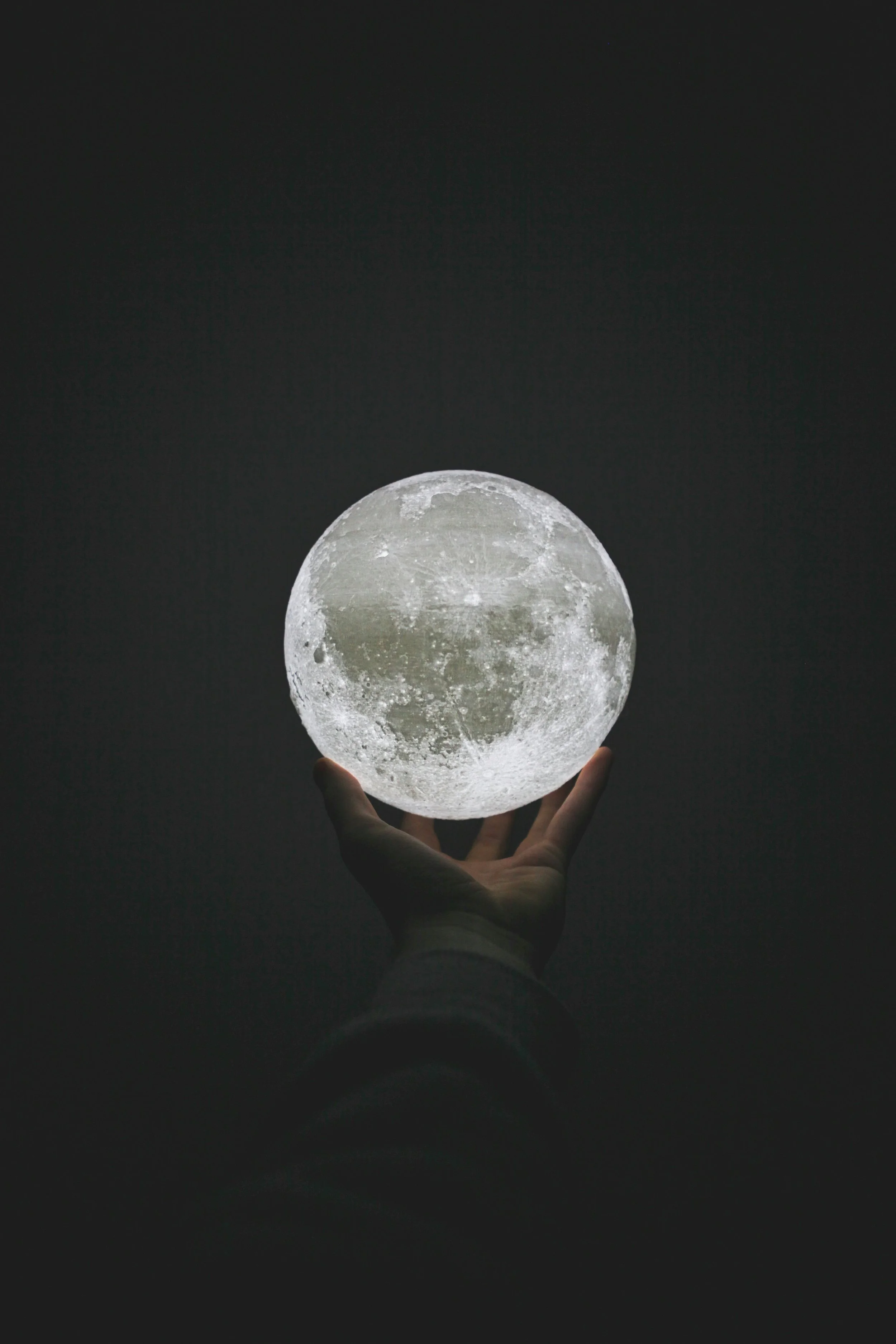
For most of my childhood, I believed the moon was a toy. Something expensive. Delicate. Hung carefully in the sky so it wouldn't break. Each night, it sat above our mango tree, glowing perfectly and round, as if it had just been unwrapped. Whenever my mother asked what I wanted for my birthday, I told her, ‘I want the moon.’ I wanted it the way other children wanted bicycles or dolls. Mother would laugh and shake her head as if I were speaking a foreign language.
One evening, the moon had dipped lower than usual, resting just above the mango tree as if it were waiting for me alone. I dragged a dining chair into the yard, then a stool, then a plastic crate. I stacked them carefully under the mango tree, building my own small tower. My mother watched from the doorway.
‘What are you doing?’ she asked.
‘Getting the moon.’
‘Come on, you can’t reach for it like that. Get down,’ she said.
I ignored her. The tower wobbled as I climbed. I stretched my arm until it ached. The crate slipped. The chair shifted. The tower collapsed. I landed hard on the grass. The moon did not move. My mother ran toward me, breathless. For a moment, she looked frightened, but she calmed when she saw I had no broken bones, only a small bruise on my knee.
‘It isn't something you can take,’ she scolded me.
The next day, I wrote a letter to the moon in my scrawly handwriting.
Dear Moon, Please come down for one day, and play with me.
For weeks, I awaited a reply. The letter remained on the windowsill facing the mango tree until its edges curled and yellowed. Some mornings, I could have sworn it had shifted slightly. It remained there until its edges curled and yellowed. The moon never answered, but I never stopped watching it.
Once, during a power outage, my father took me outside. The neighborhood was dark, and the moon above us seemed brighter than I remembered.
‘I wish it were mine,’ I said.
‘The moon?’ my father prodded.
‘Yes.’
‘Funny thing about beautiful things,’ my father said. ‘Everyone wants to keep them.’
We stopped by the pond near our house. The water held the moon perfectly. I crouched at the pond’s edge and reached out to touch it. The reflection shattered into silver fragments. The ripples spread, and the moon returned, unchanged. My father and I watched in silence. Night insects hummed around us like a low, steady song.
Later, I learned about the moon and how far away it was. On a clear night, it appeared above the mango tree, exactly where it always has, round and luminous, as if someone had placed it there with great care. That night, it seemed to beckon me. I gazed at it for a long time before drifting into a deep sleep. The next morning, I found a letter on my windowsill.
Swetha Amit
Swetha is an MFA Graduate from the University of San Francisco. The author of a memoir, A Turbulent Mind, and three chapbooks. Her words appear in Had, Bending Genres, Ghost Parachute, Gone Lawn, Cream City Review, and others.